
South Bend Previous Resident Eras
Different records answer different parts of a South Bend house history. The parcel ID links current tax and map sources. Recorded deeds show title events. Directories can name dated subscribers or occupants, while maps document the building and block. No source spans the full life of every address.
| Source | Years It Covers | Where Held | What It Shows |
|---|---|---|---|
| Recorder deeds | County formed in 1830; online start is not stated | Recorder, Archives, Tapestry | Legal instruments and title events |
| Property cards and GIS | Annual card; aerial layers from 1966 through 2025 with gaps | Assessor and County GIS | Parcel, improvement, map, and assessment snapshots |
| City directories | 1869-1870 through Polk 1920-2015, with gaps | SJCPL, State Library, Notre Dame, online scan | Dated residents, firms, jobs, and street numbers |
| Criss-cross directories | 1950-1956, 1964-1965, 1972-1995 identified | Library of Congress inventory and SJCPL | Address-to-subscriber or business links |
| Sanborn maps | 1885, 1891, 1893, 1899, and 1917 through 1949 sets | Indiana State Library and SJCPL | Footprint, materials, use, street, and lot context |
| News and obituaries | Victorian paper index 1875-1913; Tribune access from March 1994 | SBAGS, SJCPL, Michiana Memory | Moves, deaths, businesses, and public notices |
For a recent period, begin with the current parcel and deed. For the mid-twentieth century, add criss-cross volumes. For the nineteenth century, expect printed directories, deed books, maps, and staff help rather than one online address index.
Start South Bend House History
The Assessment Neighborhood Map accepts an address or county tax ID. Select the parcel, switch on the Parcel layer, and use PARCPRC to open the annual card when available. A card may show owner or taxpayer, situs and mailing addresses, parcel number, legal lot, class, transfer data, value, and print date. Treat it as a dated assessment snapshot.
The county's published sample demonstrates why fields must stay distinct: it shows a tax ID, parcel number, LLC owner, different mailing and property addresses, a legal lot, and a prior transfer. It is a field example, not a South Bend resident result. Save the parcel key and legal description before following previous residents backward.
Trace South Bend Owners Backward
The St. Joseph County Recorder is the legal-instrument custodian. Tapestry supports names, dates, consideration, document number and type, tract, subdivision, and parcel searches. Its index can point to a deed, but the recorded image and legal description are needed to confirm that the hit belongs in the chain.
- Copy the current tax ID, owner field, and legal description from the Assessor card or GIS.
- Find the present owner's purchase instrument. Match the parcel or legal description, document type, and date.
- Read the seller as grantor, then search that party as a prior grantee to locate the earlier purchase.
- Repeat the sequence, recording instrument numbers, dates, parties, and unresolved gaps.
- When the online index stops or becomes unclear, book a Recorder public-computer session or request the older book, microfilm, or certified instrument.
- Grantor and grantee
- The grantor conveys an interest; the grantee receives it.
- Chain of title
- The linked sequence of recorded transfers for the same land.
- Legal description
- The lot, block, subdivision, or survey wording that identifies land more precisely than a street number.
Tapestry costs $8.75 per search. Images cost $1.50 for the first page and $1.25 for each later page. The Recorder also offers Laredo, a limited-data free search, an office counter, mail contact, and appointment-only public computers. Search costs are not the same as copy or certification charges.
A blank search does not end the chain. It may reflect a parcel-format mismatch, a name variant, a recent transfer, or an older period outside the web index. The Recorder records deeds, mortgages, liens, leases, plats, easements, and other land instruments, and some older books or microfilm may remain office-held. Public-computer appointments last one hour and are not offered between noon and 2:00 p.m. Bring the tax ID, likely date range, legal description, and names already confirmed so staff can target the right index or volume.
South Bend Renumbering Breaks Trails
The 1883 South Bend directory followed a city address renumbering. An entry from an earlier volume may therefore describe the same place under another number. Do not force a direct modern match. Compare the old street index, an 1867 directory entry, the subdivision plat, deed legal description, Sanborn sheet, and nearby intersections.
This is one of the strongest local reasons to track a parcel rather than a name. Parcel lines can still change through splits, combinations, annexations, or street vacations, so write a reconciliation note for every bridge between an old address and a modern parcel.
Sanborn sheets can anchor the corner, building outline, and adjacent lot when the number changed. A recorded plat can then connect that block and lot to the legal description. Modern GIS completes the comparison, but it should be labeled as current spatial context rather than proof that an old structure survived intact.
Map South Bend Previous Residents
Sanborn fire-insurance maps add physical evidence to a previous-resident search. South Bend sheets identified by the Indiana State Library span 1885 through 1949 in several editions. They can show a building footprint, construction material, use, street name, lot context, and fire-protection detail. They do not name a modern owner or prove occupancy.
The Indiana State Library's South Bend Sanborn holdings identify the mapped editions available for address research.
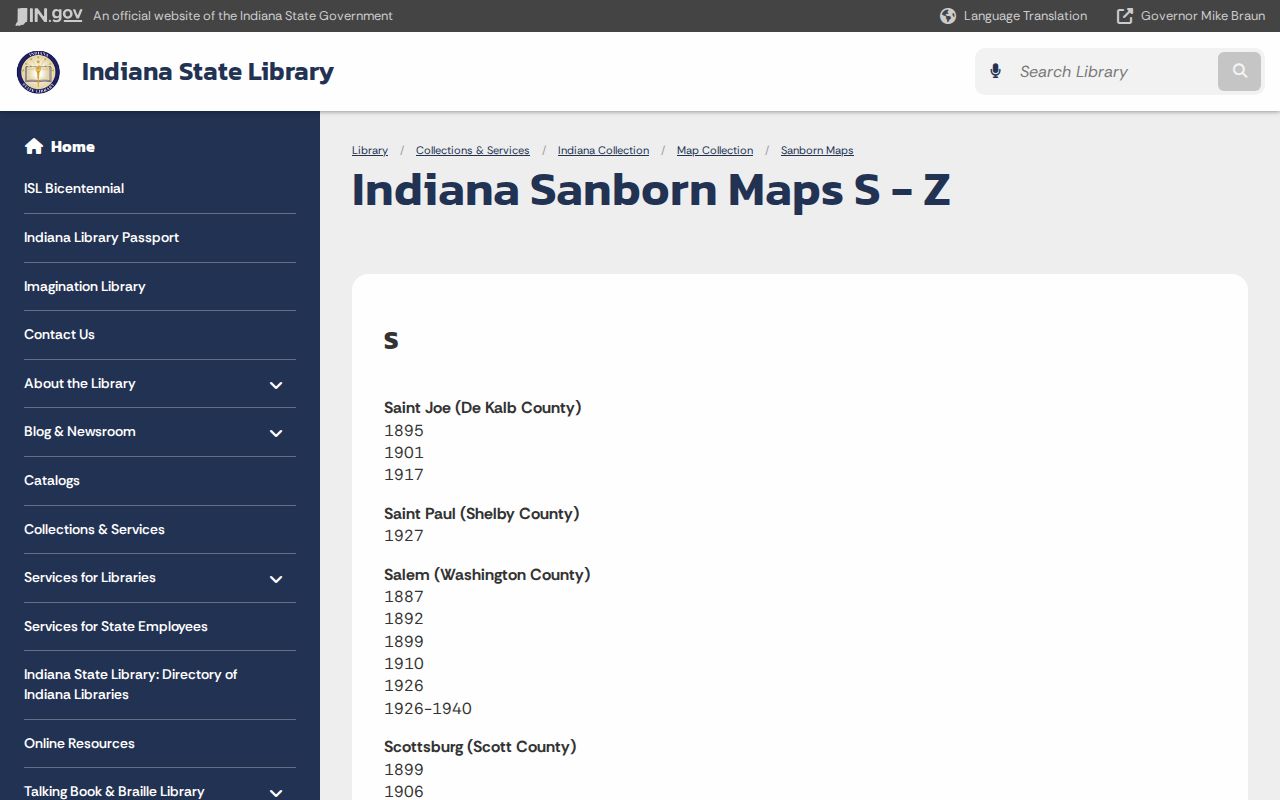
The edition list helps select a map year that can be paired with a deed or directory entry from the same period.
South Bend Historical Research Help
Unindexed work often needs a library or society. SJCPL's local and family history query form asks for a name, address, date range, and focused question. The service is limited, carries a $10-per-hour research fee with a one-hour minimum, and gives staff enough detail to check sources that are not searchable from home.
The South Bend Area Genealogical Society indexes provide routes into estates, divorces, recorder material, cemeteries, newspapers, licenses, and census sources.
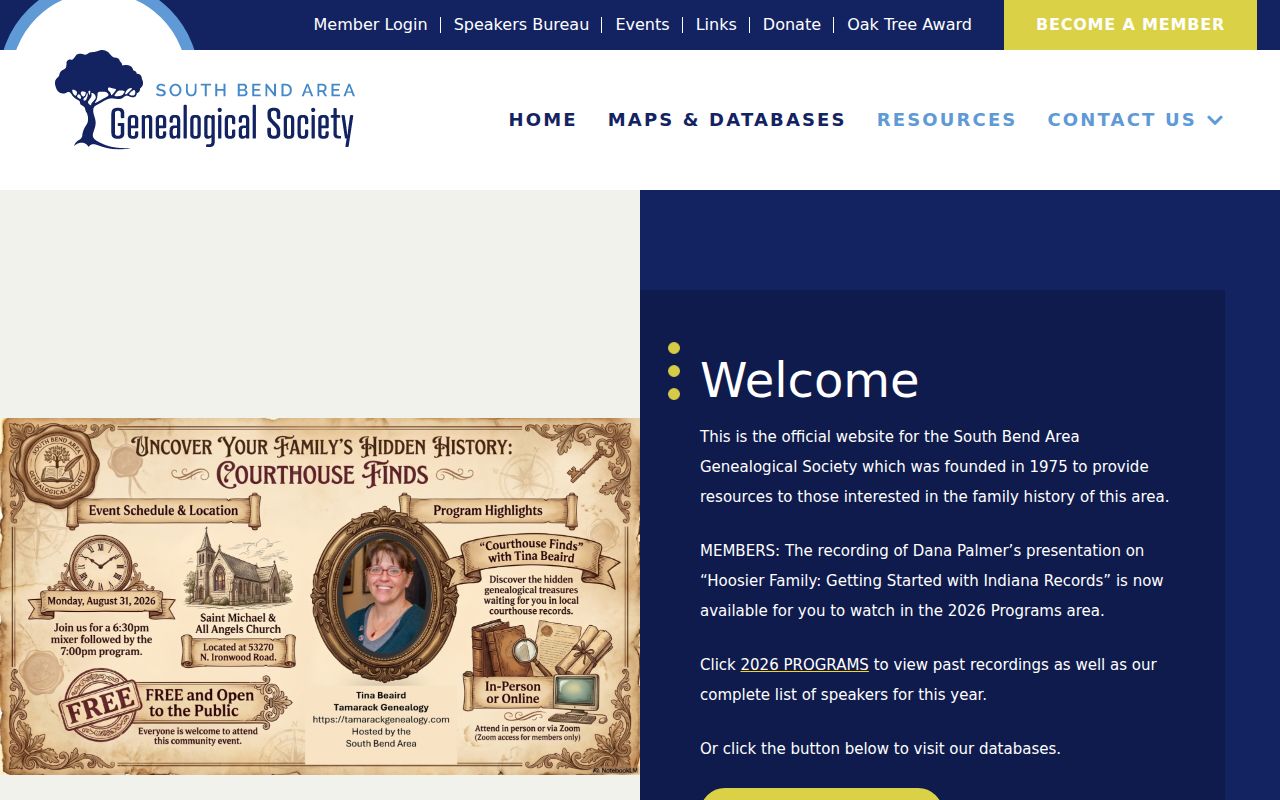
These indexes are leads. Check the cited newspaper, court file, deed, or cemetery record before adding an event to a house timeline.
The Indiana State Library property research guide explains the current-owner-to-deed method.
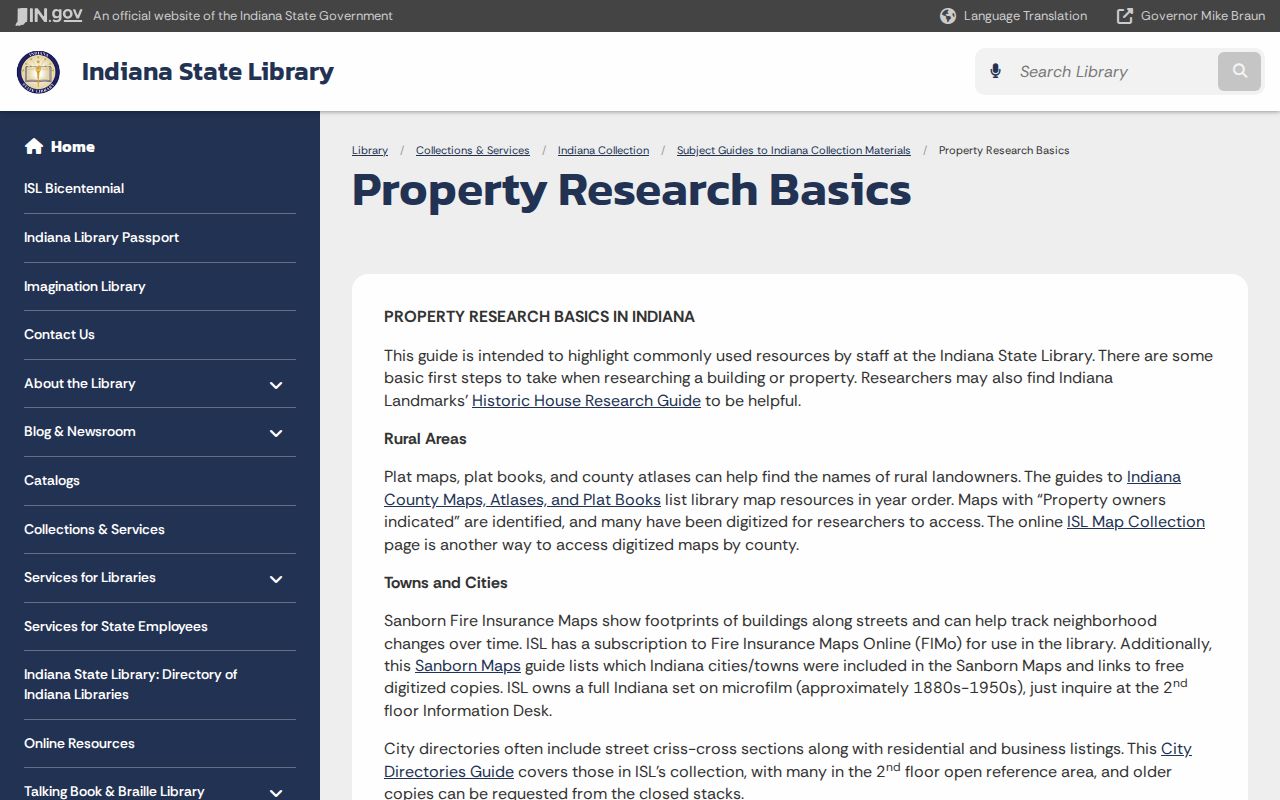
Its source order supports the same parcel-first method used for South Bend house history.
SJCPL databases also include local and family-history tools, Michiana Memory, and newspaper resources. The History Museum's Victor Bendix Research Library offers another local-history route. When asking for help, provide one address spelling, the best date range, the names already found, and one clear question. Staff can search far more effectively than when asked for everything about a house.
Indiana Legacy Extends the Trail
After deeds and directories identify a name, historical state indexes can help locate a related life event. Indiana Legacy gathers searchable historical index material, but an index entry is only a pointer to the underlying record. Use the county, date, and record type to distinguish people with the same name.
The Indiana Legacy historical index offers a statewide search route for a South Bend family-history lead.
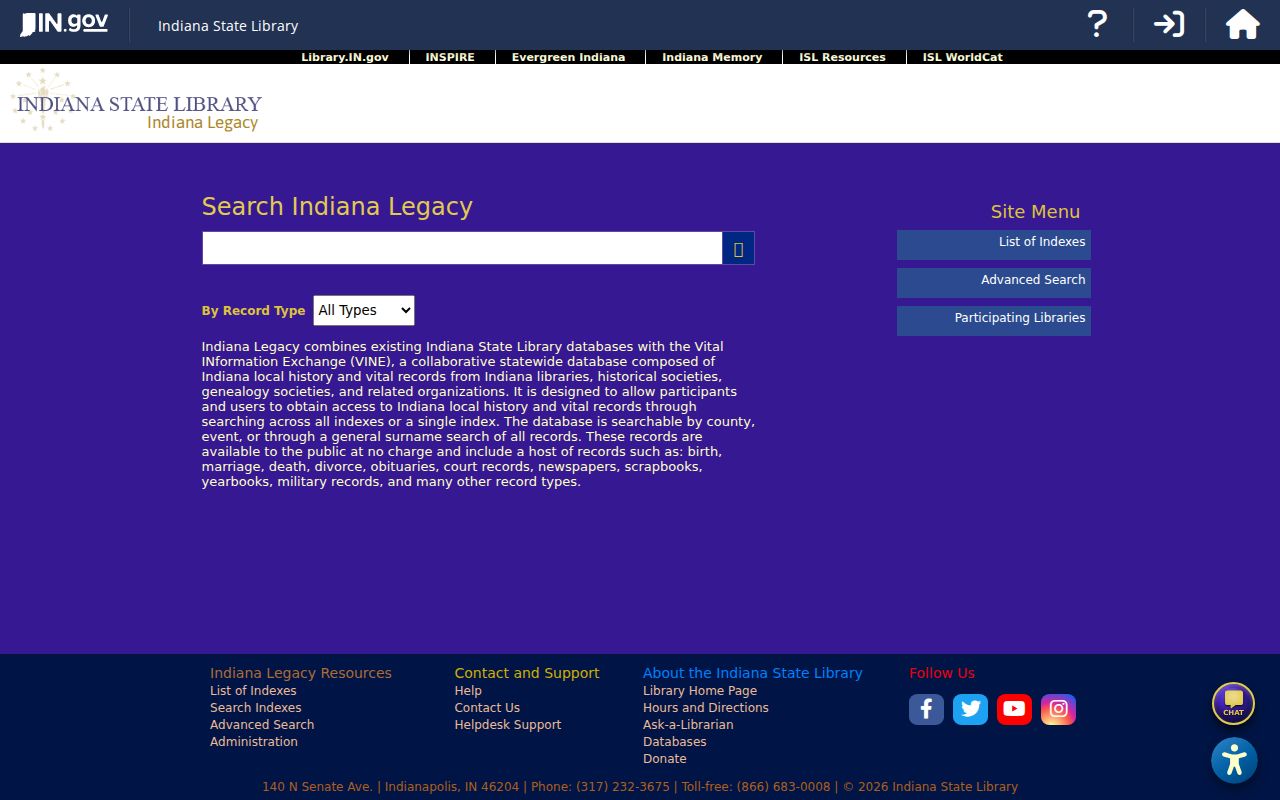
A match can guide the next archive request, but it should not replace the certificate, probate file, newspaper, or other original source.
Vital records have their own county and state limits. County genealogy searching covers qualifying St. Joseph County records from 1882 under the published application rules. Indiana holds births from October 1907 and deaths from 1900, while certificates require the proper eligibility and identity proof. A historical index can help distinguish past residents, but it is not an unrestricted certificate search.
Confirm South Bend Past Households
Owners are not the whole household. A dated alphabetical or criss-cross directory may identify a subscriber, spouse, boarder, occupation, or business at an address. Pair it with the nearest available census year and preserve each source's date. The South Bend directory collections, year runs, and reading keys are covered on the South Bend city directory page.
- Write the address exactly as it appears in the deed or map for that year.
- Check the directory street index and alphabetical entries, noting each person's printed role.
- Compare the closest census schedule or index, allowing for renumbering and spelling variants.
- Use newspapers, obituaries, cemetery indexes, and probate files to explain a move, death, inheritance, or business change.
- Log the year, record type, page or instrument, parcel, and any conflict that remains.
City Cemetery, founded in 1832, provides a respectful local bridge to cemetery and obituary research. SBAGS indexes Victorian newspapers from 1875 to 1913, while SJCPL reports South Bend Tribune access from March 1994 forward. A death notice may name relatives or a former address, but dramatic claims should be checked against the original publication and official file.
Lawful use. Research South Bend previous residents for house history, family history, and lawful personal inquiry. Never use a historical lead to harass or track a living person.
A good final timeline labels title holder, taxpayer, directory occupant, permit applicant, and obituary subject as different roles. It also cites the exact custodian and access date. Stop where the sources conflict rather than choosing the name that seems most likely.